Related Content

Supervised Consumption Services in Ontario: Evidence and Recommendations
On August 20th, 2024, the Ontario provincial government announced new legislation that would force the closure of most of Ontario’s supervised consumption services. This ban was announced without presenting any supporting scientific, clinical, or public health evidence. This report, is intended to fill this gap. Read about the range of public health and safety impacts these sites provide for our community.
View
Investigating the spatial association between supervised consumption services and homicide rates in Toronto, Canada, 2010–2023: an ecological analysis
Supervised consumption services (SCS) are effective at preventing overdose mortality. However, their effect on public safety remains contested. We investigated homicide rates in areas near SCS in Toronto.
View
Requiring help injecting among people who inject drugs in Toronto, Canada: Characterising the need to address sociodemographic disparities and substance-use specific patterns
As supervised consumption services (SCS) are scaled-up across Canada, information on those who require help injecting is necessary to inform equitable service uptake. We characterised the sociodemographic, structural and drug use correlates of needing help injecting among a cohort of people who inject drugs in Toronto, Canada.
View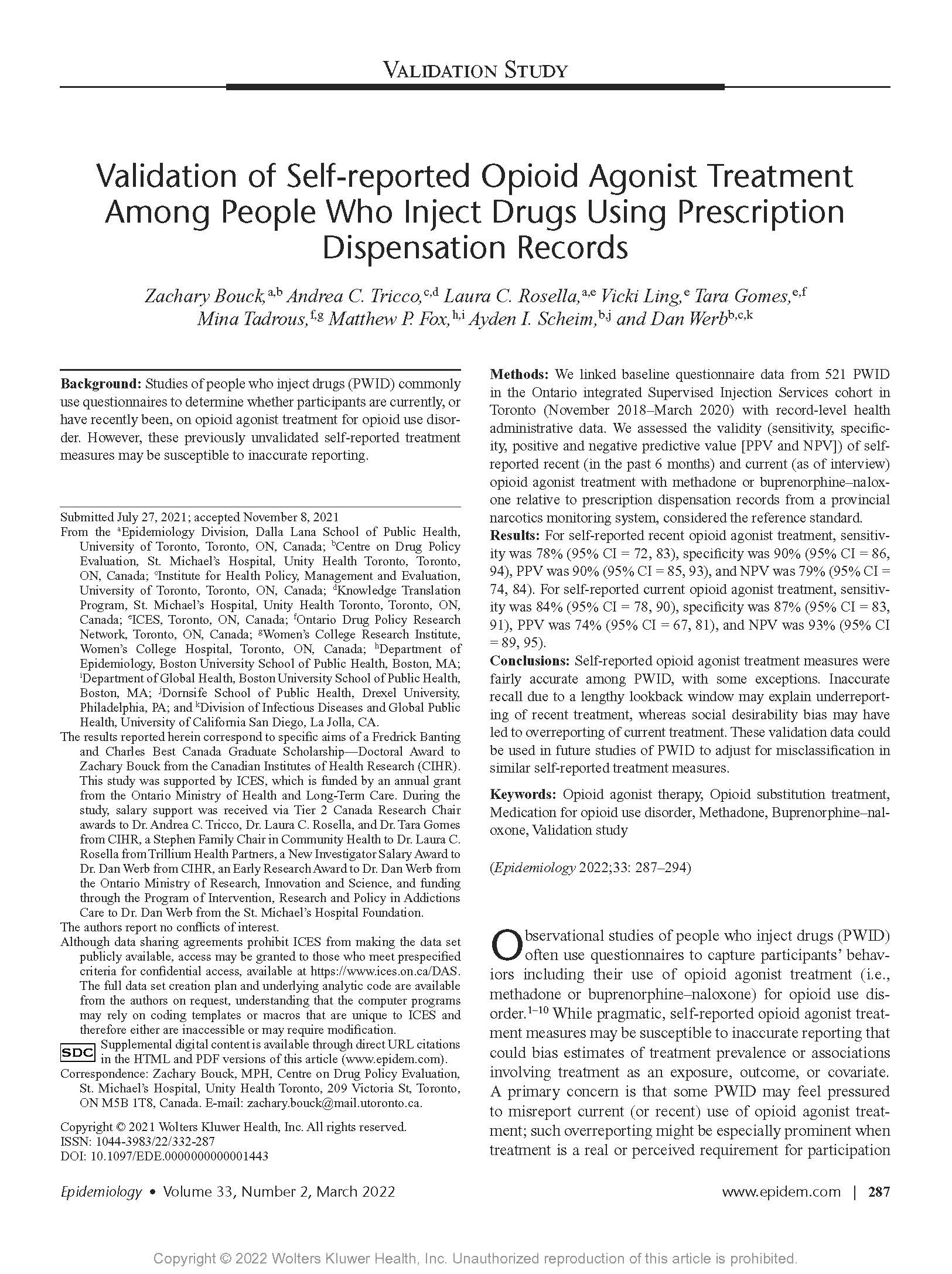
Validation of Self-reported Opioid Agonist Treatment Among People Who Inject Drugs Using Prescription Dispensation Records
Studies of people who inject drugs (PWID) commonly use questionnaires to determine whether participants are currently, or have recently been, on opioid agonist treatment for opioid use disorder. However, these previously unvalidated self-reported treatment measures may be susceptible to inaccurate reporting.
View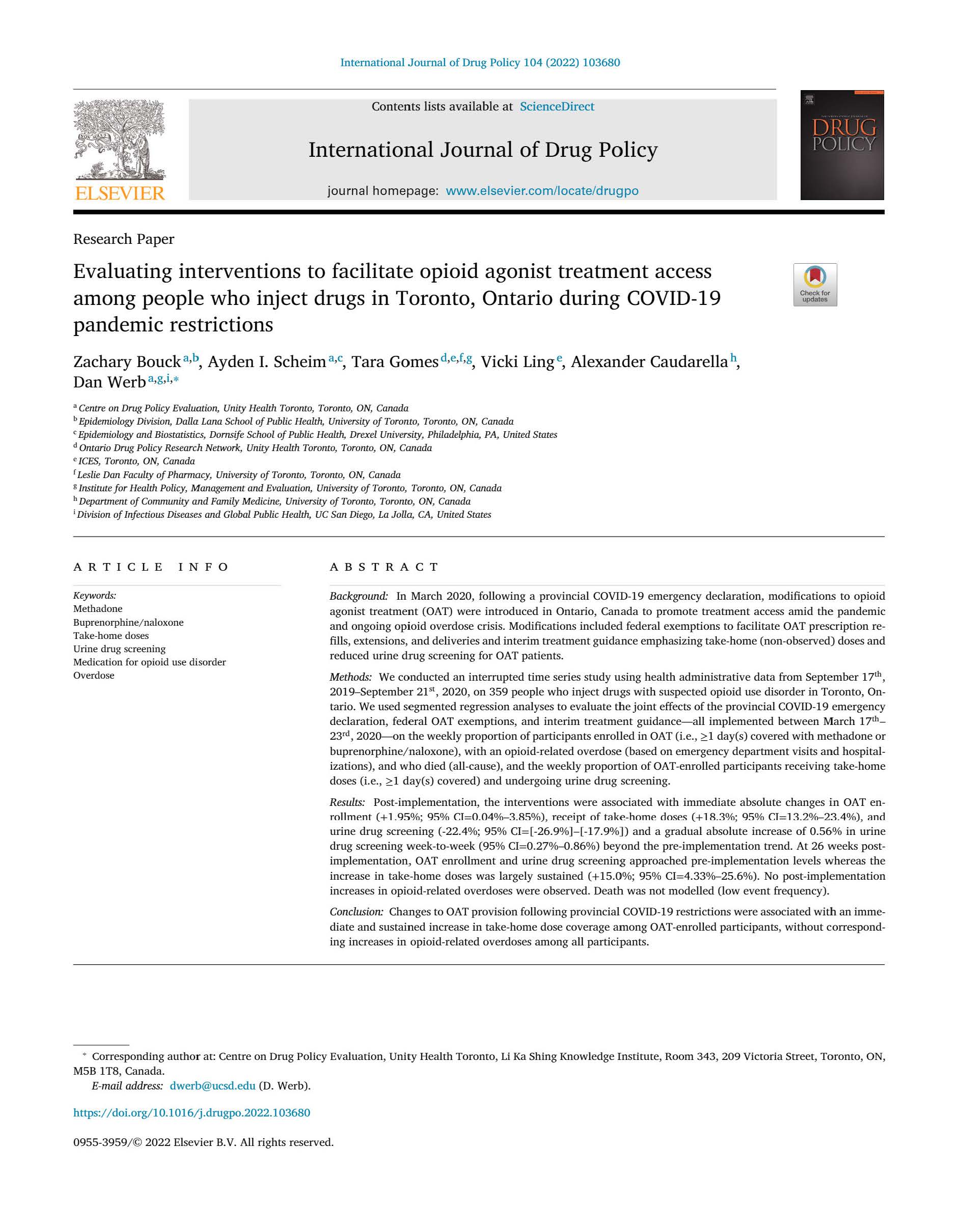
Evaluating interventions to facilitate opioid agonist treatment access among people who inject drugs in Toronto, Ontario during COVID-19 pandemic restrictions
In March 2020, following a provincial COVID-19 emergency declaration, modifications to opioid agonist treatment (OAT) were introduced in Ontario, Canada to promote treatment access amid the pandemic and ongoing opioid overdose crisis. Our objectives were to evaluate the effects of these modifications on OAT enrollment and on receipt of take-home doses and the frequency of urine drug screening among OAT-enrolled participants, as well as to investigate concurrent pre- and post-implementation trends in opioid-related overdoses and all-cause mortality.
View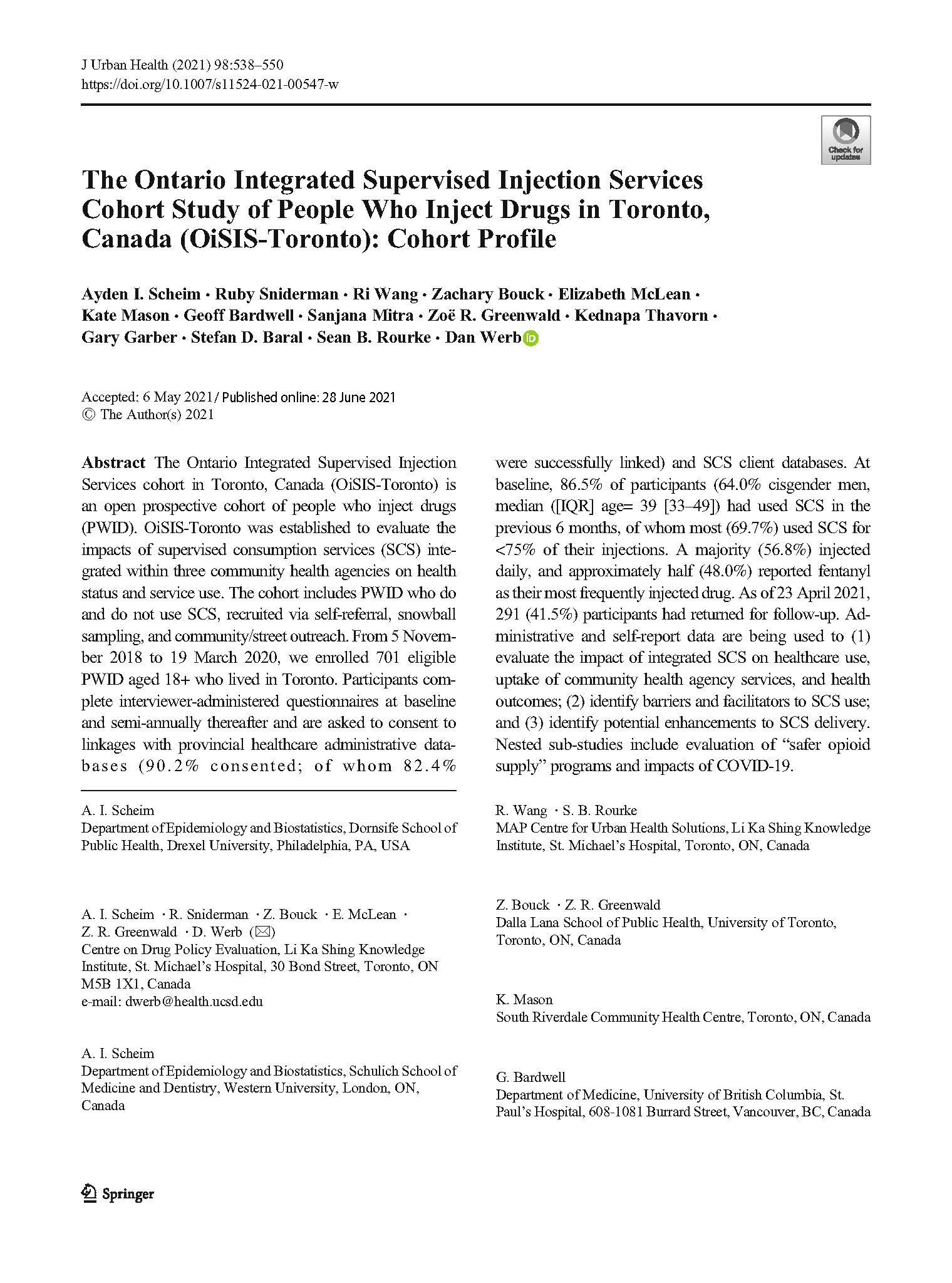
The Ontario Integrated Supervised Injection Services Cohort Study of People Who Inject Drugs in Toronto, Canada (OiSIS-Toronto): Cohort Profile
The Ontario Integrated Supervised Injection Services cohort in Toronto, Canada (OiSIS-Toronto) is an open prospective cohort of people who inject drugs established to evaluate the impacts of supervised consumption services integrated within three community health agencies on health status and service use.
View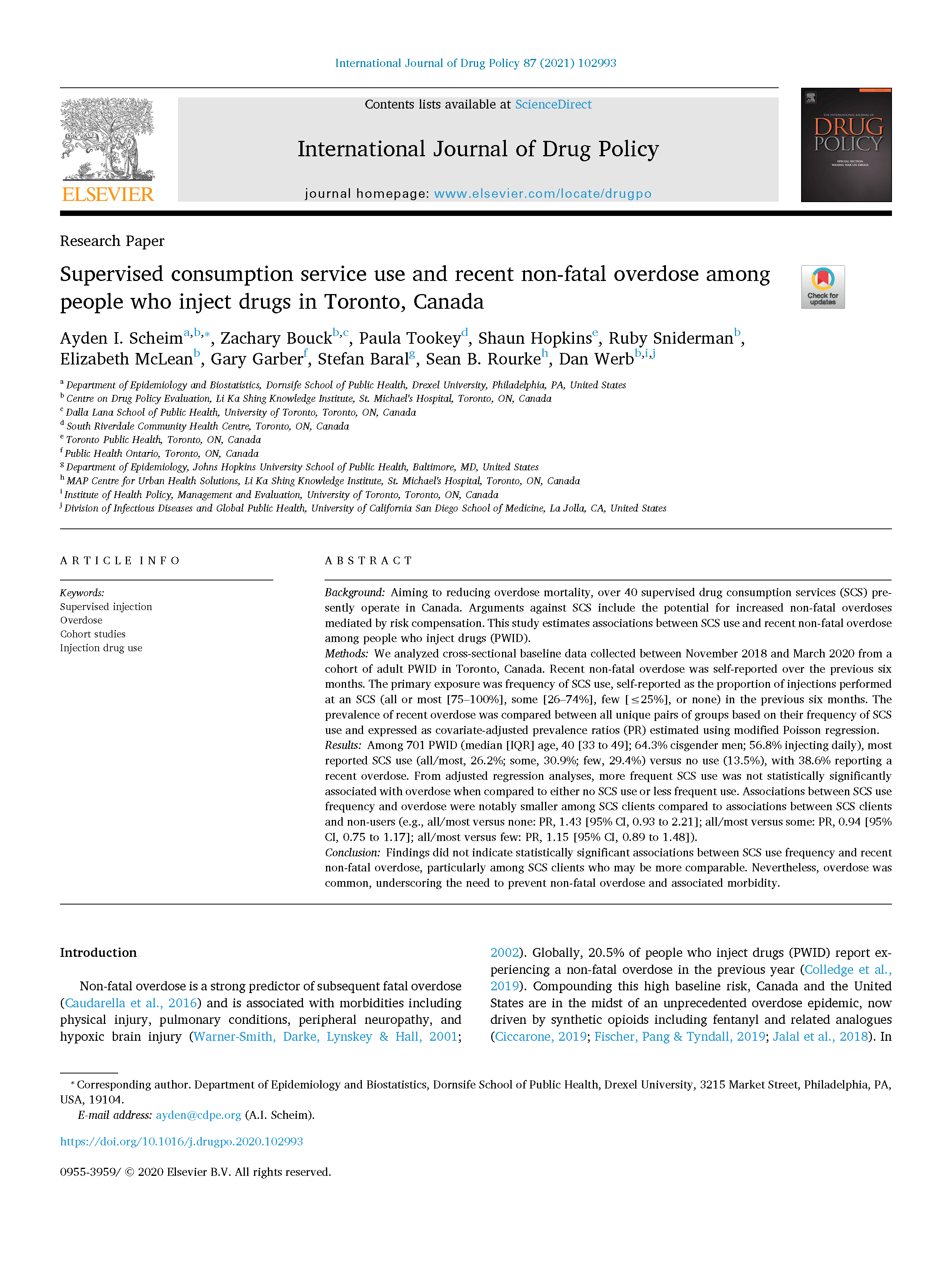
Supervised Consumption Service Use and Recent Non-Fatal Overdose among People Who Inject Drugs in Toronto, Canada
This study examined associations between SCS use and non-fatal overdose among PWID in Toronto, Ontario, Canada amidst the current opioid overdose epidemic, drawing on baseline data from a cohort of PWID including individuals who do and do not use SCS.
View
Integrating Supervised Consumption into a Continuum of Care for People Who Use Drugs
This commentary emphasizes the need for research on supervised injection services to move from asking whether such services are effective to asking whether, how, and under what conditions their benefits can be maximized.
View